Wednesday, March 22, 2006

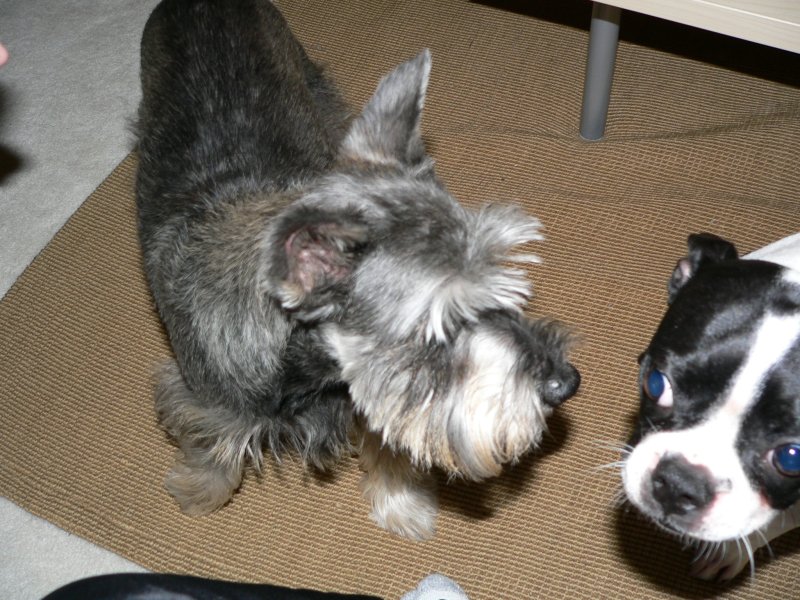
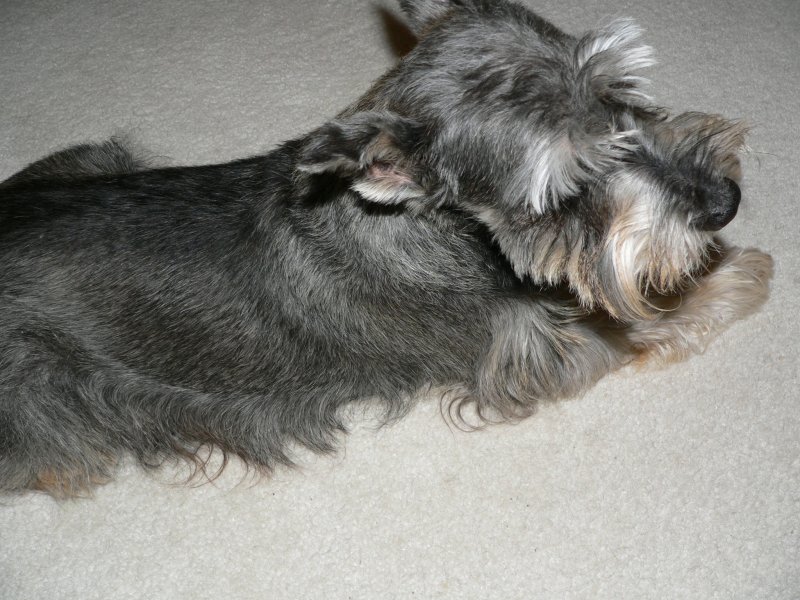
Hi My Name is Bo Bo

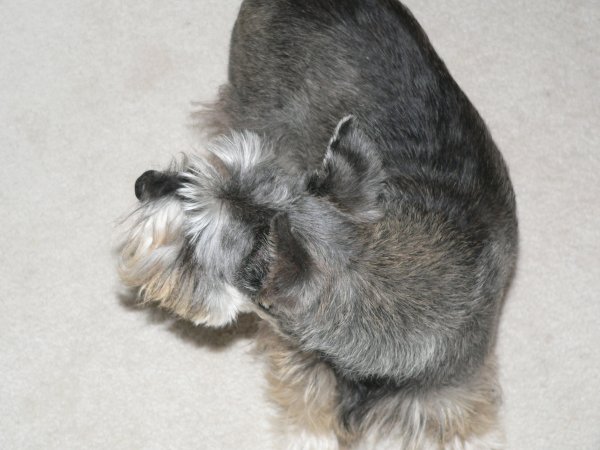
Hi, I am Bo Bo. I am 13 dog-years old. I once heard somebody said that for dog, after the 2nd year, each dog-year is equivalent to 4 human-year. So, hmm.. I am about 46 "years" old already.


My mom just tells me today that i have cancer. I don't know what it is but i think it's bad 'cuz she cries a lot when we got home. She hugs and kisses me like she is going out of town tomorrow. Oh... wait a minute, I think it has something to do with me going to a vet office every week. They have me drink some stinky stuff and put me in a funny looking machine. I lost most my fabulous hair after a few weeks.

Hold on ok, somebody knocks on the door. Let me go check...

hey, it's my best friend "Pan-fried Dumpling". She's only 3 dog years but she is very smart and active, always jumps up trying to get my mom's attention every time she comes.

Hi, Bo Bo, I am worrying for you. So I tell daddy and momy take me here to see you.

How are you... Oh give me a hug ok?


Hi Gyoza(ahem it's in Cantonese for "Pan-Fried Dumpling" ok), mom tells me i have cancer and it's bad.

What is it, never heard of... Are you gonna be ok?



I don't know. But i see mom cries so I think it's bad news. Something got into me Quiaxa, I am sick dear. mom says I may have to go somewhere far away from here.


it's so sad. Who's gonna talk to me when I come over? And who's gonna tell me funny stories about chasing squirrels and snapping birds? Can I go with you too?


Hey, don't be stupid heh? I'll be alright overthere, wherever it is. I'll bark your name Gyoza.


I don't know what to do to help you. But I'll pray for you everyday ok Bo Bo. We'll be missing you.
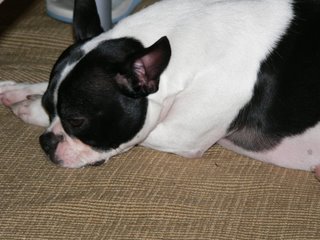

" Every step I take, every move I make
Every single day, every time I pray

I'll be missing you

Thinking of the day, when you go away
What a life to take, what a bond to break
I'll be missing you"

PS: Bo Bo isn't mine and neither is Gyoza. But I love to have them... I just wrote this article for my poor friend Bo Bo.

Saturday, March 18, 2006

Pimp Your Shell

Bored with your black and white Linux prompt? Try these tips to pimp your shell prompt for St. Patrick's day.
I tested these tips with Bash shell version 2 and above.
Most of the time, when working in s shell we see the following shell staring back at us:


bash-2.04$

If you happen to be root, you have the a "nicer" prompt:

bash-2.04#

In fact, several Linux distributions have tried to replaced this boring prompt with more colorful and informative ones.

The basic:
You change the prompt's appearance at the command line by:

%export PS1=”%”


This will create a prompt with exactly one character “%” staring at you.
So if you export

%export PS1=”Hello Worl%”

Your prompt will become:

Hello World%

This is interesting but it's just dry and static text. Why don't we add some additional info like username, current path and hostname into our prompt?

%export PS1="\u@\H%\w%"

This will give us the following prompt:

dly@nhatrang%~/download%

You get the picture? You can pretty much tell bash to display everything at the prompt. Those available infomation like current user name, hostname or current path are indicated by the slash "\" like C syntax!
If you want some more fancy stuff in your prompt here is the list:

\d Date in "Wed Sep 06" format
\e ASCII escape character
\h First part of hostname (such as "mybox")
\H Full hostname (such as "mybox.mydomain.com")
\s The name of the shell executable (such as "bash")
\t Time in 24-hour format (such as "23:01:01")
\T Time in 12-hour format (such as "11:01:01")
\@ Time in 12-hour format with am/pm

\u Your username
\w Current working directory (such as "/home/drobbins")

\W The "basename" of the current working directory (such as "drobbins")

\$ If you are not root, inserts a "$"; if you are root, you get a "#"

How do I color my prompt?

Adding color is simple. first, we design a prompt without color. Then we add some special escape sequences recognized by the shell to display part of the text in color. Usually, there are background and foreground colors, bold or not. And we have 8 colors to choose from.
Colors are selected by sandwiching numeric values between a "\e[" and a "m".
If we specify more than one numeric code, we separate each code with a semicolon. Here's an example color code:

"\e[32;40m"

So if we want to pim the previous prompt, it would be:

%export PS1="\e[32;40m\u@\H%\w%"

With 32 as the foreground color and 40 as the background color.
Look at this
grid as for your color reference.


This should yield the following format:
dly@nhatrang~/download%

We don't need to include the background color setting of 40 as black is the default color already.
What if you want to bolden the text, simply insert "1" which means brighter, bolder text.

%export PS1="\e[32;1m;\u@\H%\w%"

To get

dly@nhatrang~/download%

Friday, March 17, 2006

2006 JavaOne Conference - A "trip" to build a dream on

Even though it is not official yet, but my manager has come to my desk and announced that they are sending me out to the annual JavaOne Conference at Moscone Center in San Francisco, CA.

The event lasts from May 13th to May 16th. I am still not sure how long I will be staying in San Francisco at the moment. They probably want me to fly there on a Saturday or Sunday, just 1 or 2 days before the conference on Monday.

I have selected the session: TS-3456: Spring Web Flow. This is a newly developed and added module to the famous light-weight container Spring framework. Keith Donald, the main guy/architect behind Web Flow will give a presentation about his “baby” and later on that day we will have a chance to converse with his team.

Being in the conference and meet the masters in Java world has always been my jovial dream. I hear that Craig McClanahan, Joshua Bloch and Rod Johnson, and a bunch of hard-core developers from Apache will also be there. I was thrilled by when I got the announcement from the management and I certainly responded with alacrity as it will be a unique opportunity to titivate my Java skill!

"Beneath this mask there is more than flesh. There is an idea, Mr.
Creedy, and ideas are bulletproof." -- "V" in V for Vendetta

Wednesday, March 15, 2006

XOXO - Besame Mucho

"My Dearest Love, it's almost dawn.
I’ve been lying here all night long wondering where you might be.
I saw your Mama and I showed her the ring.

Man on the television said something so I couldn’t sleep.

But I’ll be all right, I’m just missing you.

And this is me kissing you:

X’s and O’s,
In a letter from home."
Letters from Home - John Michael Montgomery


I listened to this song on the way to work this morning. I have always wondered why X's and O's symbolize hugs and kisses in love letters. And here is what I found after doing some googling. Read on and enjoy.

Hugs and kisses is defined by a sequence of the letters X and O, for example: XOXO, XOXOXO to express the affection of lovers at the end of a letter or email.
Some interpret the letter X as the crossed arms of hug and the O as the puckered lip of a kiss. Others interpret the X as the four lips of a kiss and O as the four arms in a hug. The latter is more commonly accepted as most of my friends say so.

However, hugkiss.com claims that the X originally came from the symbol of the Christian cross and the first letter of Christ in Greek (Xristo). This dates back to mostly the pre-literate period when people used the letter X as a trusted symbol to sign a document! Later on, it became a tradition that the signers would kiss the X letter , pretty much the same way as one would kiss the crucifix or the bible, or the fingers after making the sign of the cross. Thus, the X became the symbol of a kiss in modern times.
The O letter is something of a mystery. Some say it was because the Jew tried to avoid using the X symbol of Christ so they used the O instead! Hard to believe heh? I think it's more reasonable to think the O as the symbol of two arms making a circle around another person.

All is well and good, but just want to let you know that if you wander somewhere with three flashing neon X's on a marquee, you'll be probably seeing a whole lot more than just hugs and kisses!

And the song continues:


"I hold it up and show my buddies,
Like we ain’t scared and our boots ain’t muddy, and they all laugh,
'Cause she calls me "Honey", but they take it hard,

'Cause I don’t read the good parts.
I fold it up and put it in my shirt,
Pick up my gun and get back to work.

And it keeps me driving me on,

Waiting on letters from home.
"

For all brave soldiers of the United States Arm Forces in Iraq.

Monday, March 13, 2006

Pho Shizzle

"Pho" may not be the most tranditional Vietnamese food but I can assure you that it is the most popular/wide-spread cuisine among the others.

Texas-size super bowl of pho (tô xe lửa) is as big as a full-size flower clay pot with full of hot source, boiled bean sprout and onion. From coast to coast, wherever Vietnamese community goes, there are always at least a couple of pho restaurants opened to served. This soup somehow manages to sneak into the dictionary of American with a funny, non-punctuation pronunciation. My family once owned a phở restaurant back in Vietnam. Our phở bò kho (beef stew) was among the best in town (Ninh Hoà, about 40 miles north of Nha Trang)!!!

Pho originated from the northern side of Vietnam (probably at the dawn of the 19th century) and began spreading to southern Vietnam in the mid 1950's after the French was defeated and the eventual partition of the nation.

Speaking of styles in pho, there are actually several ways to categorize:

Regional styles have:
  • Phở bắc (northern style): distinguishable by a wider noodle
  • Phở nam (southern style): using a thinner noodle,
  • Some people even claim that there a "cetral style (Huế)", but I personally never seen one
Meat flavor styles have:
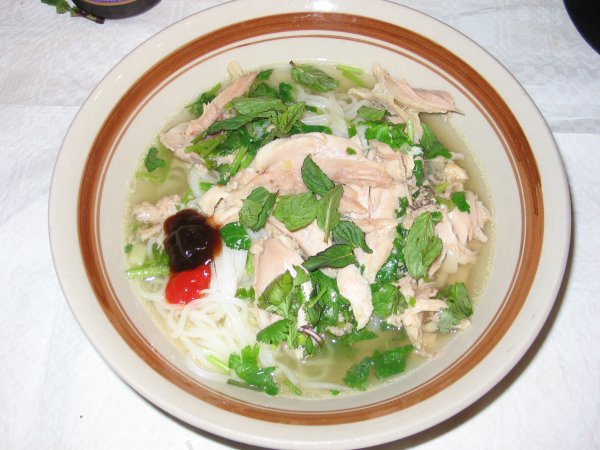
  • Pho Gà (Chicken-based pho)
  • Pho Heo (porky)
  • Pho Bò (beef) (grand daddy, tranditional style)
  • Pho Bò Kho (beef stew)
  • or even vegetarian pho.
  • Seafood style also known to exist
Pho Gà

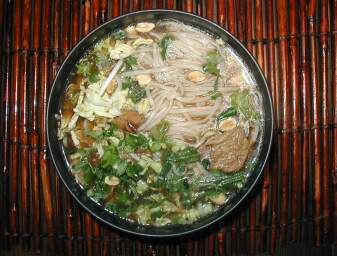
Veggie delight pho with tofu substitutes the meat


Pho Bò (Beef, can be served raw then dip in the super hot soup bowl to delicately process the meat or "tái" in Vietnamese.


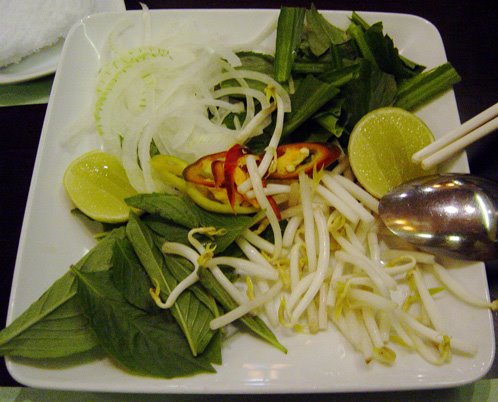
Pho Bac in my opinion somewhat emphasizes on a bolder and spicier flavor while Pho nam is sweeter with added a lot of bean sprouts and fresh herbs (or my American friends call "grass" and "mint").
Some photos of the "green" herbs we add into the bowl of pho


By the way, naming convention for pho restaurant is pretty unanimous:
  • With a number: numbers can indicate two different things: A restaurant opened in a year indicate the name. Some of them are "Pho 54", in Houston we have 'Pho 2000" etc... Or, the restaurant opened in Vietnam before immigrating and named after the street number. For example "Pho 24" (I am not sure about this name tho). Some don't care for the number but take the street name instead, like "Pho Cong ly", "Pho Cong Hoa", "Pho Tu Do" were pretty big names in Saigon before the war.
  • A restaurant named after its owner. This is rarer but quiet mundane now specially for some new opened restaurants: "Pho Binh", "Pho Nga", "Pho + your name, your daughter name, your dad name" etc.... I think this style of naming convention is self-indulgent and ordinary.
A toothsome pho bowl is a super hot (as it's making you shizzle), has very clear soup water. Making a clear soup bowl is not easy. Pho's sweet flavor obtained from source consolidated in pork or beef bones. The source must be filtered thoroughly before yielding the crystal clear soup. I think for this reason chilli sauce, hoisin sauce or balsamic leaves are put on tables as customers' need. As placing these condiments without asking could be considered unorthodoxial among cranky consumers who want to see the clear bowl of soup before enjoying the soup.

And if you live in Houston, you should try a bowl of "Pho Thai Binh Duong" (pacific Ocean Pho) super bowl. They don't name the restaurant for nothing: their proudly served super bowl is the biggest I ever seen. I wish i could have some photos handy to post. But believe me, I've seen some even ate 2 bowls of this size.

Nothing would be more delightful than having a big hot bowl on a cold day when you could just enjoy the soup forgetting about your sweat dripping down along side your face into the bowl (ewww!!!). Nothing could beat that...

Cheers and go get some phở my friends.

Saturday, March 11, 2006

A trip to Museum District in Houston

Location
Spring break is here in Houston, but the weather doesn't' give us a break today with humidity reaches nearly 90% and temperature is top 85.
Living in Houston for almost 8 years now but I don't really explore it much. So I decided to pay Houston's museum district a visit this weekend to learn more about Houston and take some pictures around.
The
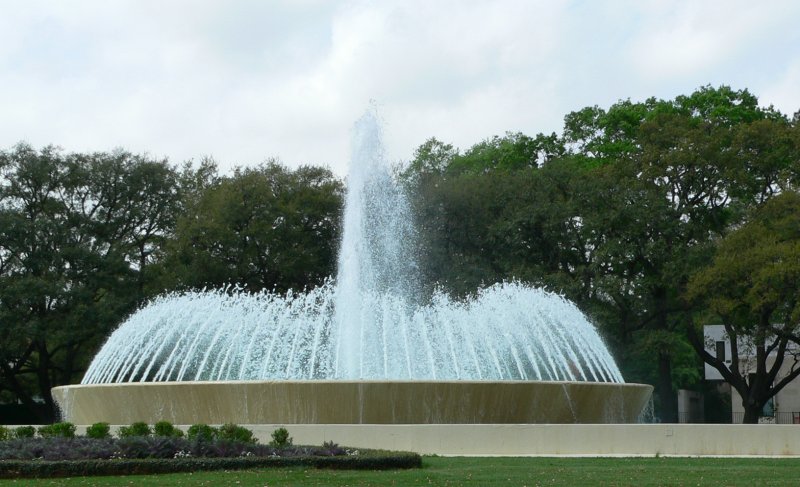
Houston Museum district is one of the two main recreational districts in Houston. The other one is Theater District housing visual performance art shows and exhibit. The district is centered on the pink-colored Wyndham-Warwick Hotel and the adjacent Mecom Fountain. The Museum District also houses Rice University, the Clayton Library Center for Genealogical Research and Hermann Park which includes the Houston Zoo and the Miller Outdoor Theatre. The Museum District is also near the University of Saint Thomas. Some of the museums include:
  1. The Holocaust Museum
  2. Houston Children Museum
  3. Houston Children Museum
  4. Houston Museum of Health and Medical Science (located in the medical center. Houston's Hermann Cancer Center is the world's the largest and most modern, state-of-the-art cancer center.)
  5. Contemporary Arts Museum
  6. and the Museum of Fine Arts
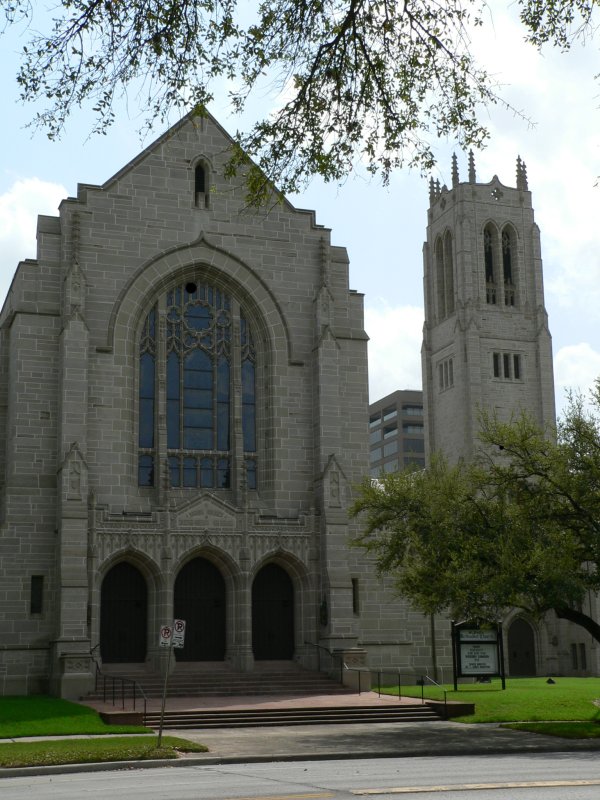
This area is served by the Museum district Station light rail which connect the district to downtown Houston and to the medical center. One noticeable aspect when you approach the district are local churches. There is one antique and huge church at the entrance to the district from Main Street: saint Paul's United Methodist church, built around 1919. The I stop for a bit at the museum of fine arts. This museum has all kind of collections from different periods of art history. Last year they hosted a collection of masterpeices from the Impressionism. Those include paintings of Picasso, Monet and Van Gogh. Needless to say, I had to wait in the line for hours before stepping into the museum to witness those mutil-million dollar artwork. This is from the collection of classical antiquity period:
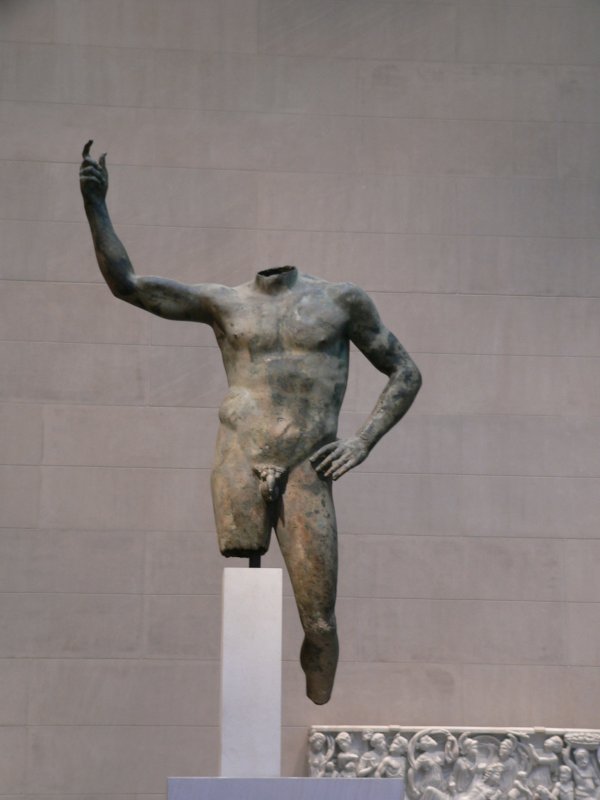
The unknown Emperor: cast bronze, found and excavated from a wrecked ship in Atlatic Ocean


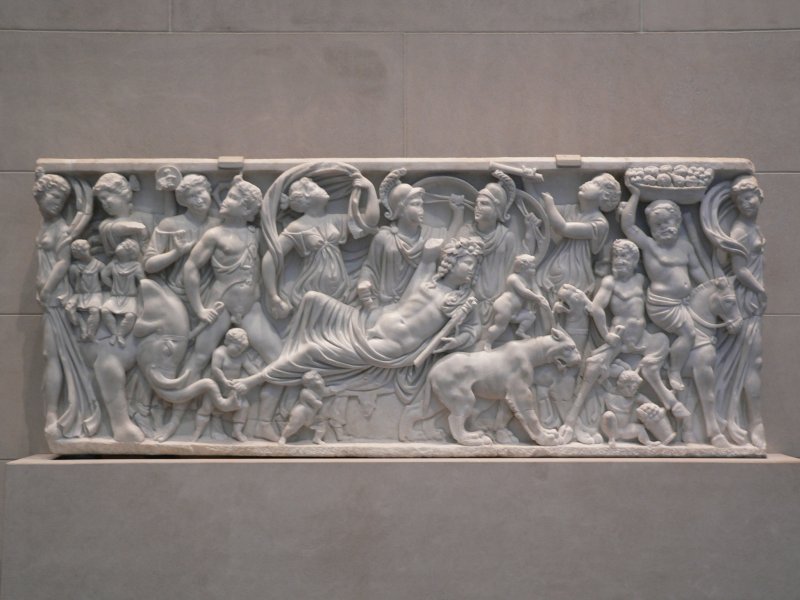
This one i think was taken from one of the Delphi temple in Acropolis, Athen :-).
Yeah... we all stole from them Greek.

This one is the limestone life-size sculpture of Athena

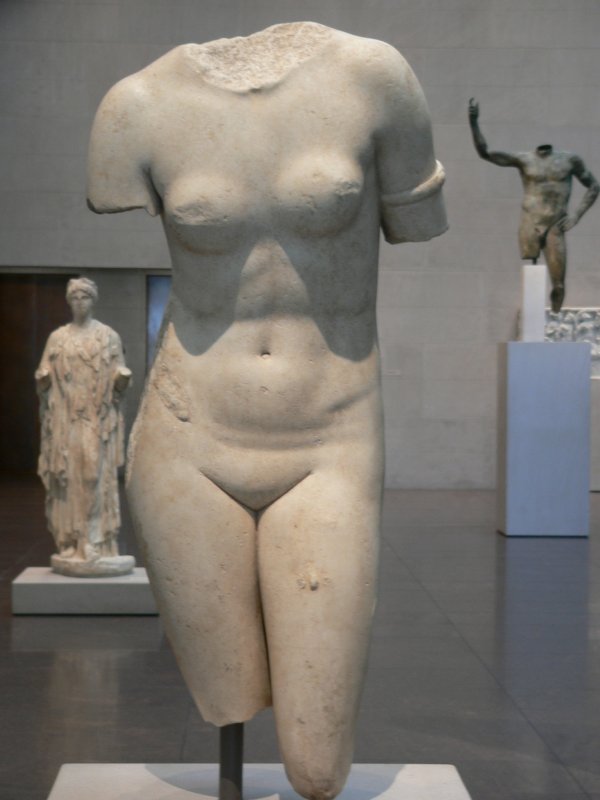
Early stone statue version of Venus (Aphrodite). Most of modern sculpture based their work on this style of posture.

This reminds me of my art history class taken a few years ago. The form of classical sculpture became fluid and natural and the stylization of the archaic art gave way to realistic figures which emanated the illusion of moving through space. For the first time in human history, human anatomy was deemed worthy of being immortalized in stone or bronze. And the Greek did it. They worshipped the human body. Gods were as human asn us, but they were just immortal. And gods did have sins and flaws too. What a monumental contradiction point of view!
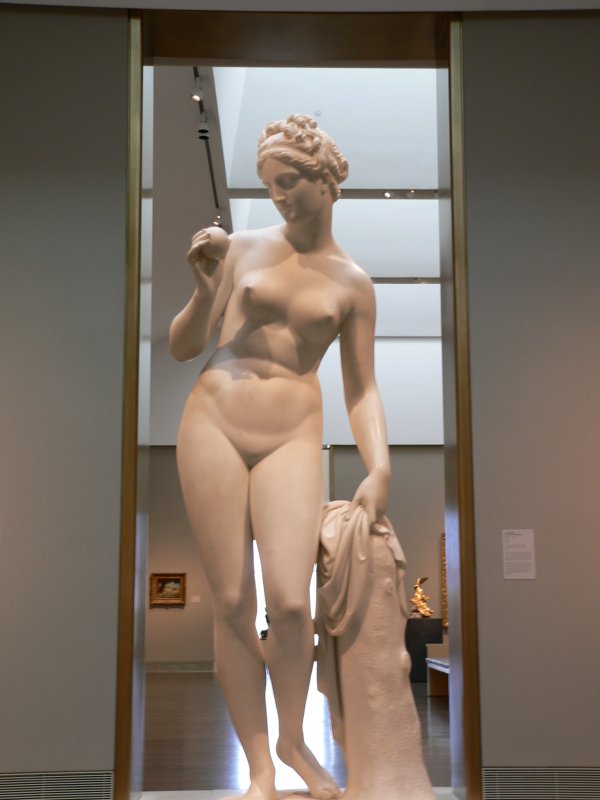
During the classical period the Greek artists replaced the stiff vertical figures of the archaic period (like Egyptian's sculpture if it could help you to visualize better) with three-dimensional snap shots of figures in action. While the archaic sculptures appeared static the classical statues held dynamic poses bursting with potential energy. The overall patterns of immobile muscles were developed into a complex universe of tension and relaxation. The ancient Greek sculptors had finally achieved balance through the opposing action of the human muscle groups. Most of Greek sculpture in this period involved around a unique technique called contrapposto: The appearance of weight shift in sculpture by the depiction of counter-positioning, in which the body relaxes on one side as the other side takes on the weight of the body and tenses up.

Like this one form the modern age:
There are also lots of paintings from the 15th century.

Last supper, Sebastiano Ricci

The mocking of Christ, Tintoretto . Notice the red circle i draw here. This bearded figure standing in the background is probably his self-potrait, so that the artist witnessed Christ's torment on a personal level.
Get out of the museum, I perambulate to the Hermann park at the heart of the museum district throuh a semi-circular fountain. There are actually three consecutive ones, but I can only manage to have one in this snapshot

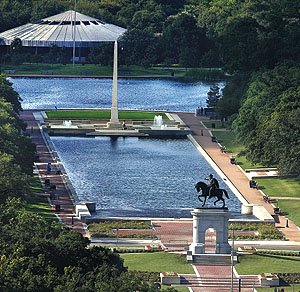
Hermann Park look from Terrance Plaza
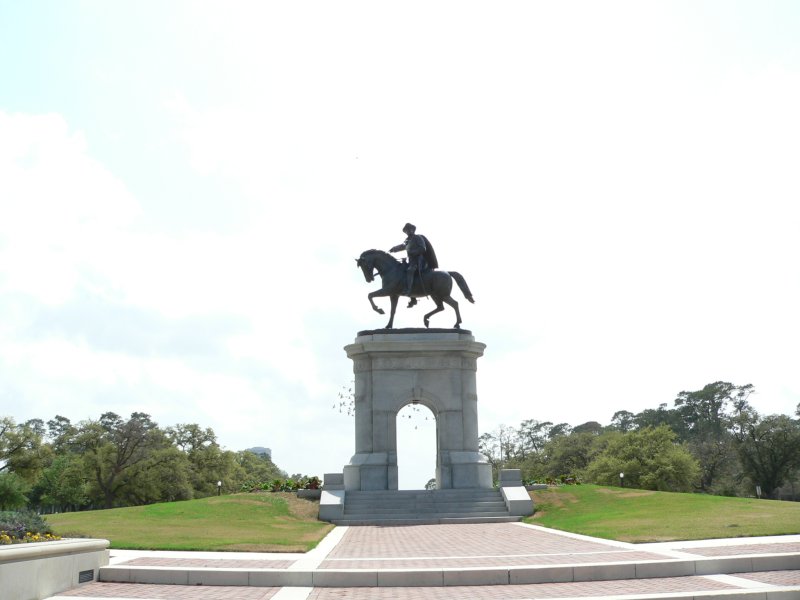
The Sam Houston Monument and Circle frame the Heart of the Park's north end; the area known as the Lake Overlook, which fronts Hermann Park's McGovern Lake, forms the south end.

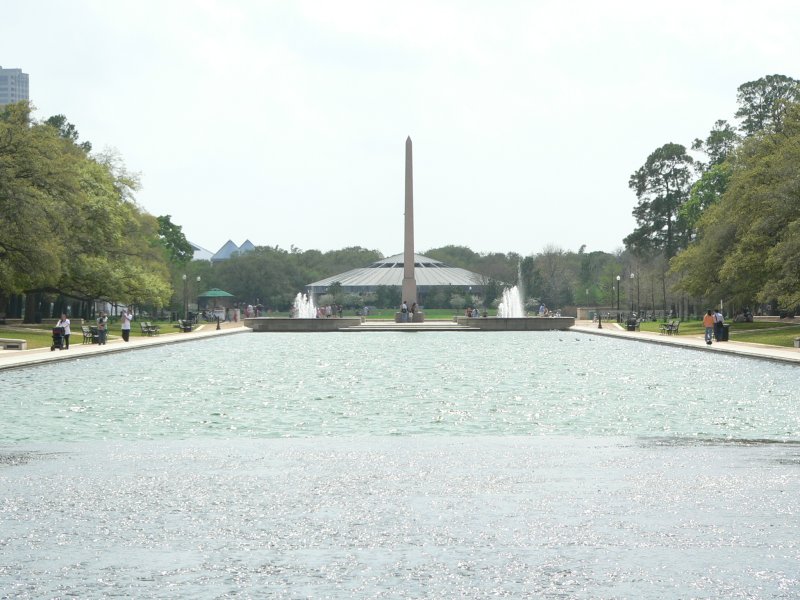
The Heart of the Park's central and most prominent feature – the 740-foot-long and 80-foot-wide Mary Gibbs and Jesse H. Jones Reflection Pool – is flanked by two pedestrian plazas that are situated between the Sam Houston Circle and the Lake Overlook. Bordered by 80-year-old live oak trees, shaded walking paths of decomposed granite, and groupings of new benches, the Pool also features a cascade created by the gentle flow of water down a series of stepped surfaces. Its black bottom was designed to enhance the water's reflectivity.

Reflection Pool look from the main entrance North - South

Your author ;-)

Look from South - North

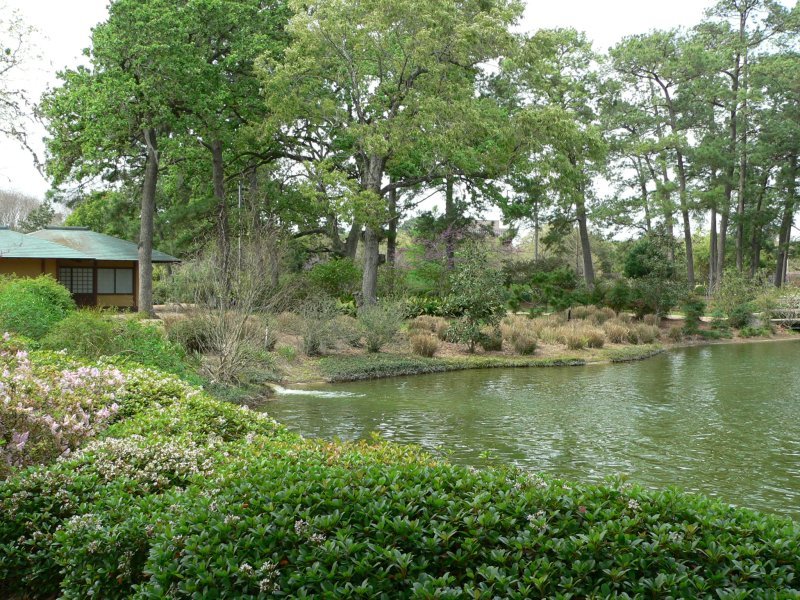
Located by the left side of the park is a Japanese garden.
From what I have learned this particular garden is a daimyo style, and includes a tea garden, a kaiyushiki stroll garden, and a scroll garden.
The entry garden is a dry landscape garden.
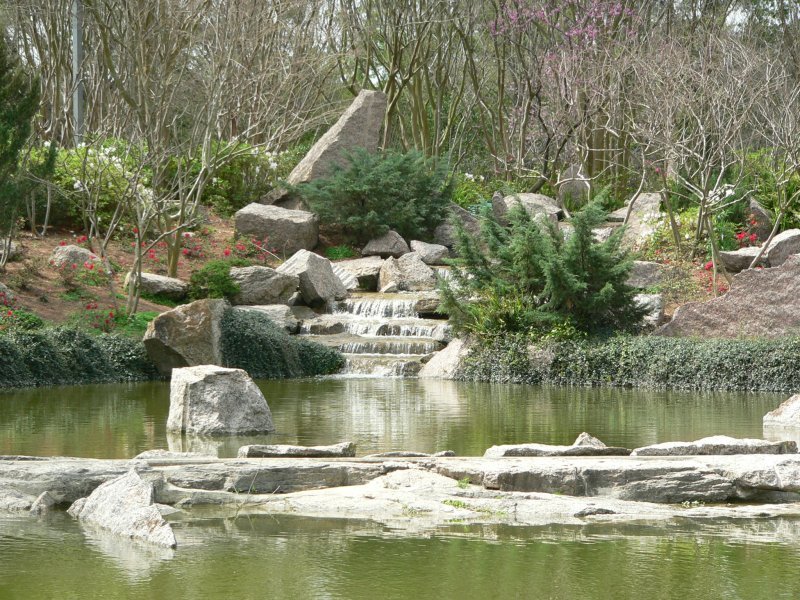
japanses garden often mimics nature. Thus, the garden itself represents a mini ecosystem, lanscape. Stones are islands, streams are rivers. The design of the garden also has to follow certain feng-shui rules.


Imagine you are standing on the sea (black moonstone) and the boulders are the rising landscape of Japan. The bamboo flowing in the wind represents the sound of the ocean.
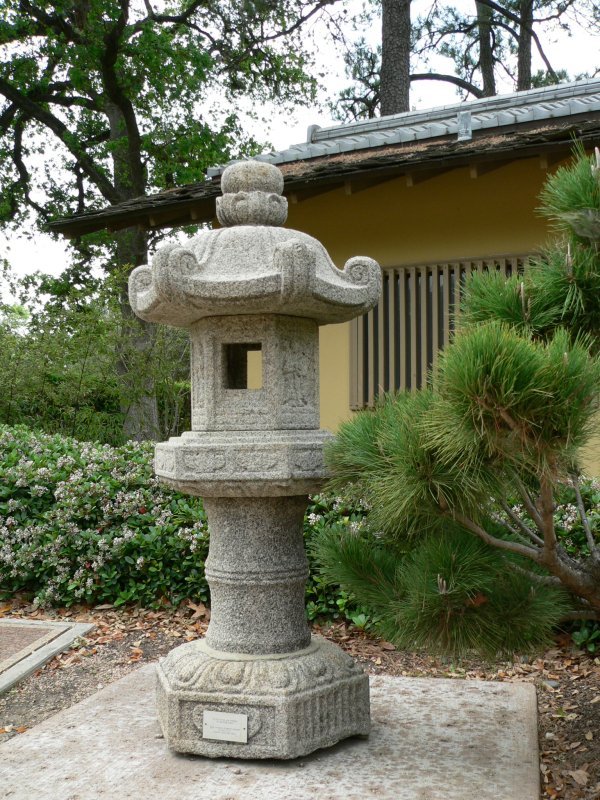
Through the gate straight ahead there is a welcoming lantern, a gift from the city of Chiba, Japan. This five-piece lantern was carved from solid granite. The aperture of the lantern focuses the spirit of the garden. There are three stone lanterns, ishi-doro, in this garden.
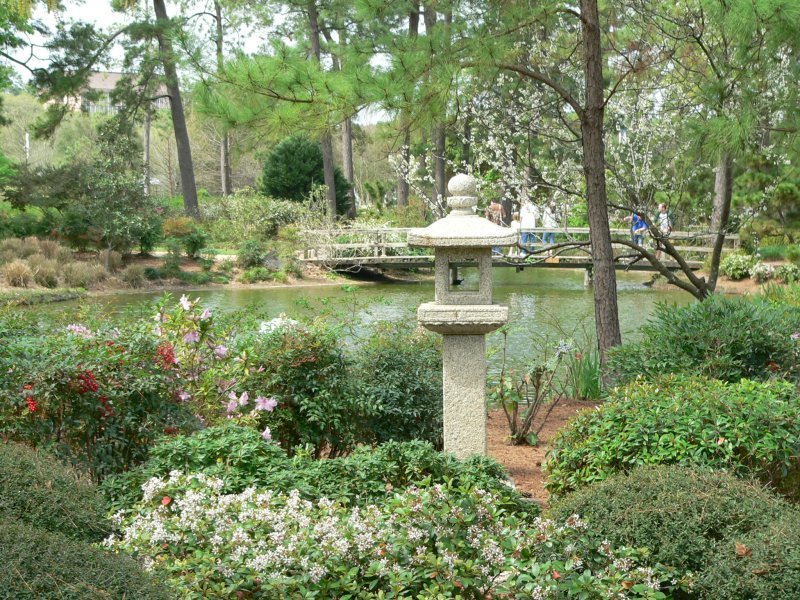
Stone lanterns play a significant role in Japanese gardens. They represent time. Usually, there are several lanterns are placed in a garden to remind visitor of the time present.
Curved pathways in the garden are covered with crushed stone similar to moonstone. The arbor is a place to sit, meditate and clear the mind of other thoughts. It is also special place to wait until called to tea ceremony in the teahouse.

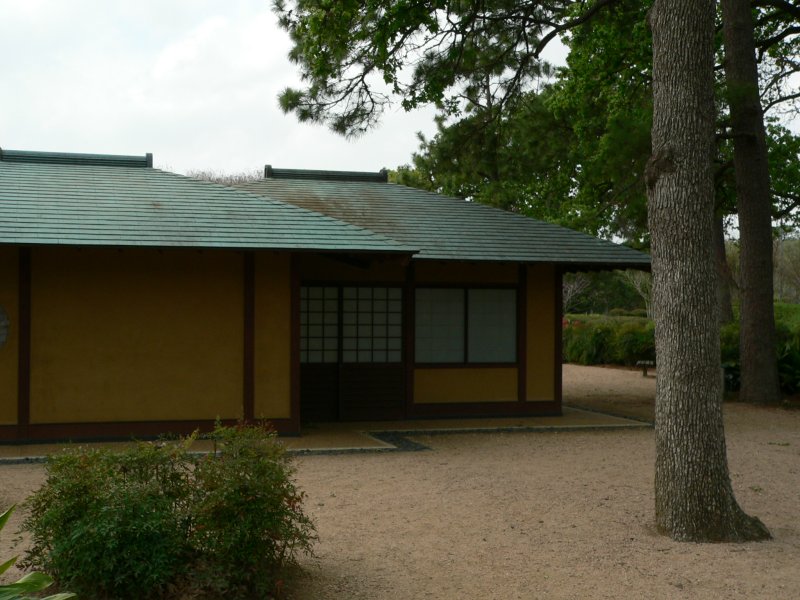
Tea House from the other side of the lake

Before entering the teahouse, tea ceremony guests walk along this path which the host will have moistened to appear damp with morning dew. This path is hence called the dewy path or roji.


Here are more scenes from the garden.


Next month, April 7 - 8 is the tranditional Japan festival. Our dojo will put on a show at Hermann park on those days. Some of the activities are rice pounding, Kendo and Iaido performance. Come here again to see my post for the event!

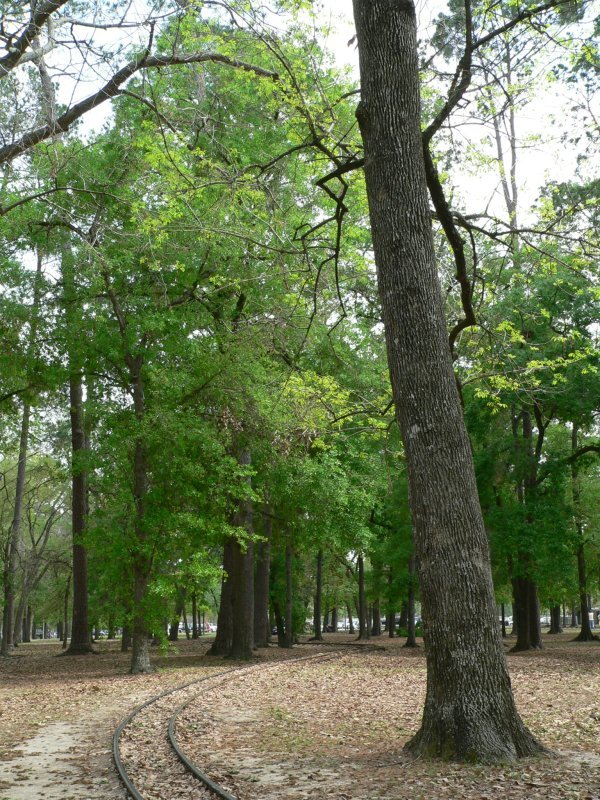
This is the miniature railroad running across the park. The railroad covers almost 100% of the park's circumfence and also there are seperate tracks running across the park.


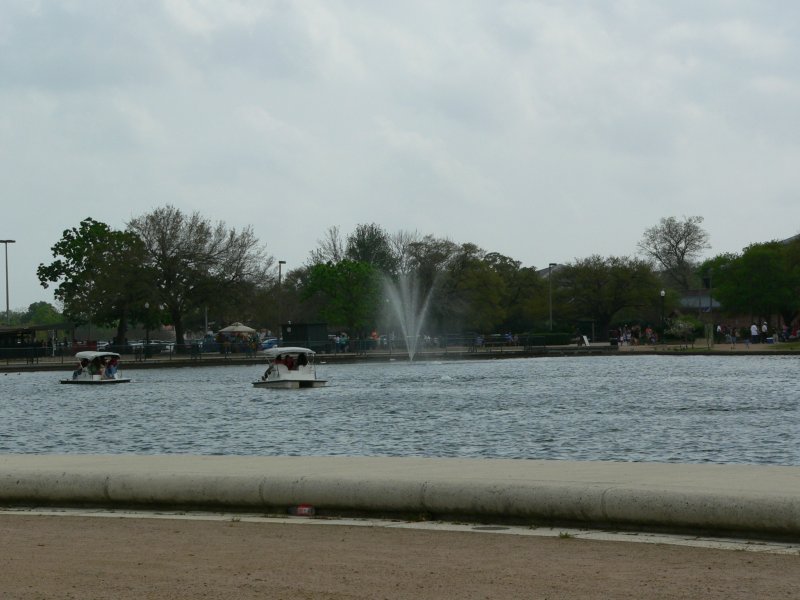
Perhap you and your special someone can pedal the swan boat on this 21 -arces McGovern Lake. Boats are for rent at $7 per hour.
In the middle of the park is a 35-foot high hill. Frisbee can be played here or you can just run up and down 'til you pass out.


So many pine trees... and green grass

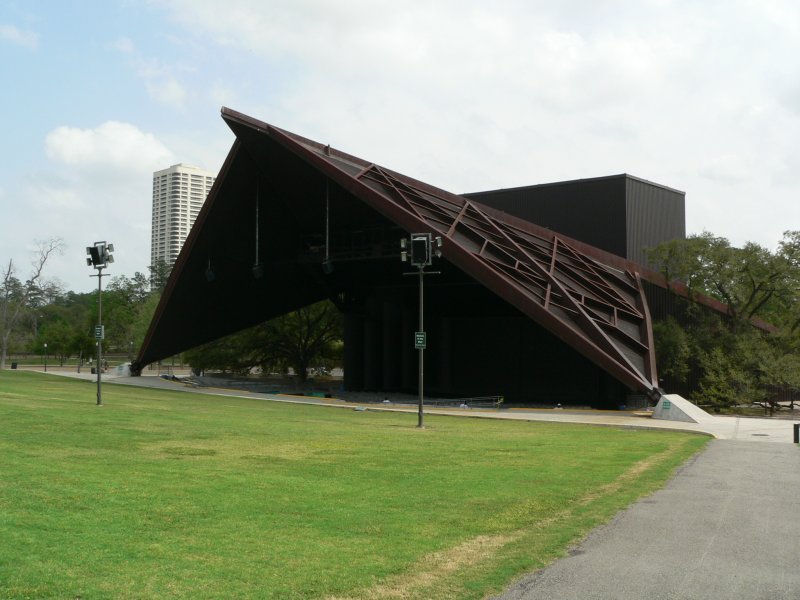
Or... practice your acting skills onstage at Miller Outdoor Theatre
That's it for now... phewww.... I'll be back next time with photo from Japan Festeval (also in here Hermann park).